![10 best accounting software for real estate investors [2026]](https://res.cloudinary.com/de1ep59a0/images/v1772088147/10-best-accounting-software-for-real-estate-investors/10-best-accounting-software-for-real-estate-investors.webp?_i=AA)
Key Takeaways
- Generic accounting software often falls short for real estate investors. However, real estate accounting platforms offer property-level tracking, multi-entity support, and investor distributions management built specifically for real estate.
- The best real estate accounting software supports your entire investment lifecycle, from tracking income and expenses to generating K-1s and audit-ready reports at year-end.
- Choosing the best platform comes down to your investment structure. Landlords and small portfolio owners may have different needs than fund managers overseeing complex, multi-entity operations.
If you’ve ever tried tracking rental income, depreciation schedules, or 1031 exchanges, you probably know that generic accounting software often doesn’t cut it. For the best results, real estate sponsors and fund managers need bespoke accounting systems.
10 best accounting software platforms for real estate investors
Here are the top accounting software platforms for real estate:
1. Agora
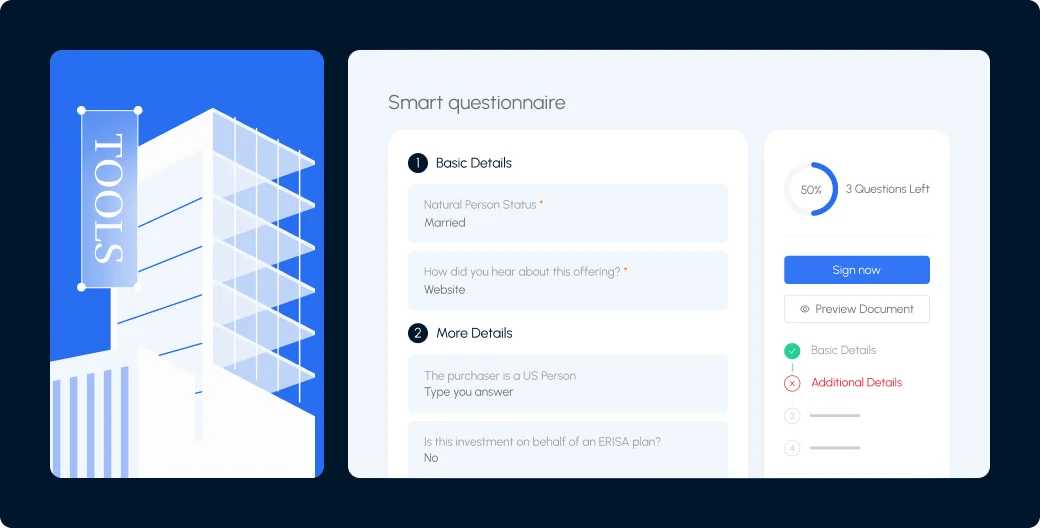
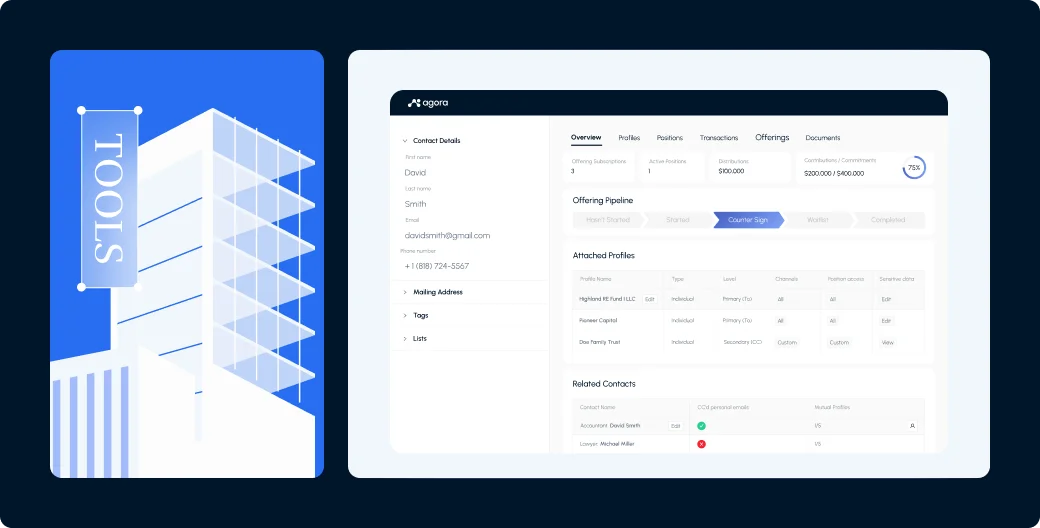
Agora is the global operating system for real estate investment management, best suited for commercial real estate GPs and fund managers who want to streamline their business operations.
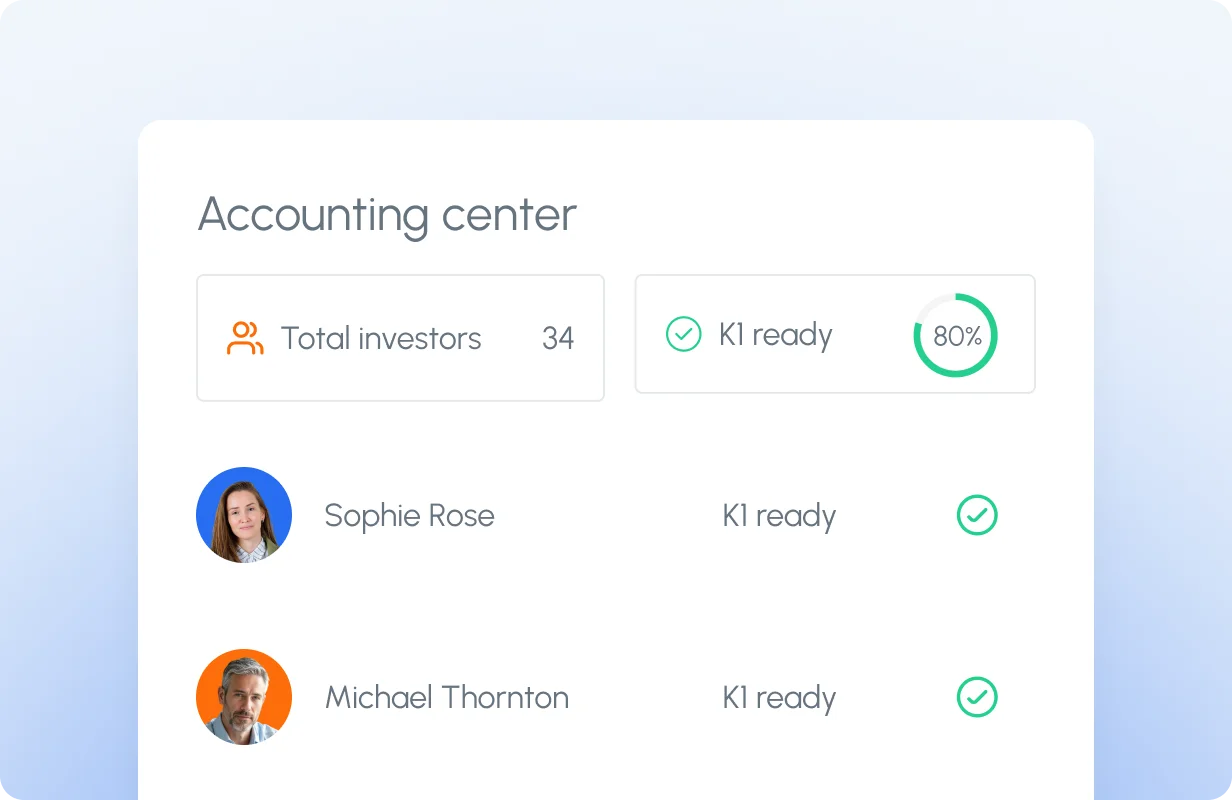
Some of Agora’s key accounting features include reconciliation, ongoing book management, K-1 delivery, and tax preparation. It’s a comprehensive solution that can handle all of your accounting needs all year round, starting at just $749 per month.
2. Yardi
Yardi is a major software brand with a range of real estate management products, including Yardi Investment Suite. This tool can help streamline accounting processes, such as consolidations, eliminations, allocations, and fee calculations.

3. AppFolio Investment Manager
AppFolio is known for its property management software, but it also has an Investment Manager arm for commercial property portfolios. Among other things, it can calculate and manage investor distributions, including preferred returns, waterfall structures, and carried interest.

4. MRI Software
MRI Software is a veteran commercial real estate software that’s been around since 1971. It includes fully integrated accounting features, such as accounts payable automation, budgeting and forecasting, general ledger, corporate accounts receivable, and more.

5. QuickBooks with real estate add-ons
QuickBooks is a household name in accounting software. Though not made specifically for real estate, it does have real estate add-ons that make it easy for CRE professionals to automate bookkeeping and keep track of bank feeds and expenses on the go.

6. Buildium
Buildium is a property management software geared toward residential portfolios. However, its accounting features can also help commercial portfolio managers monitor company financials, record transactions, and generate comprehensive financial reports.

7. Rentec Direct
Rentec Direct is a property management software for landlords and property managers, including those who oversee commercial portfolios. Its accounting features include general ledgers, trust-account compliance, and industry-standard reporting.

8. Propertyware
Propertyware is a property management software owned by RealPage with accounting features that handle accounts receivable, accounts payable, quick reconciliations, cash or accrual methods, fee management, budgets, custom reports, and more.

9. Sage Intacct for real estate
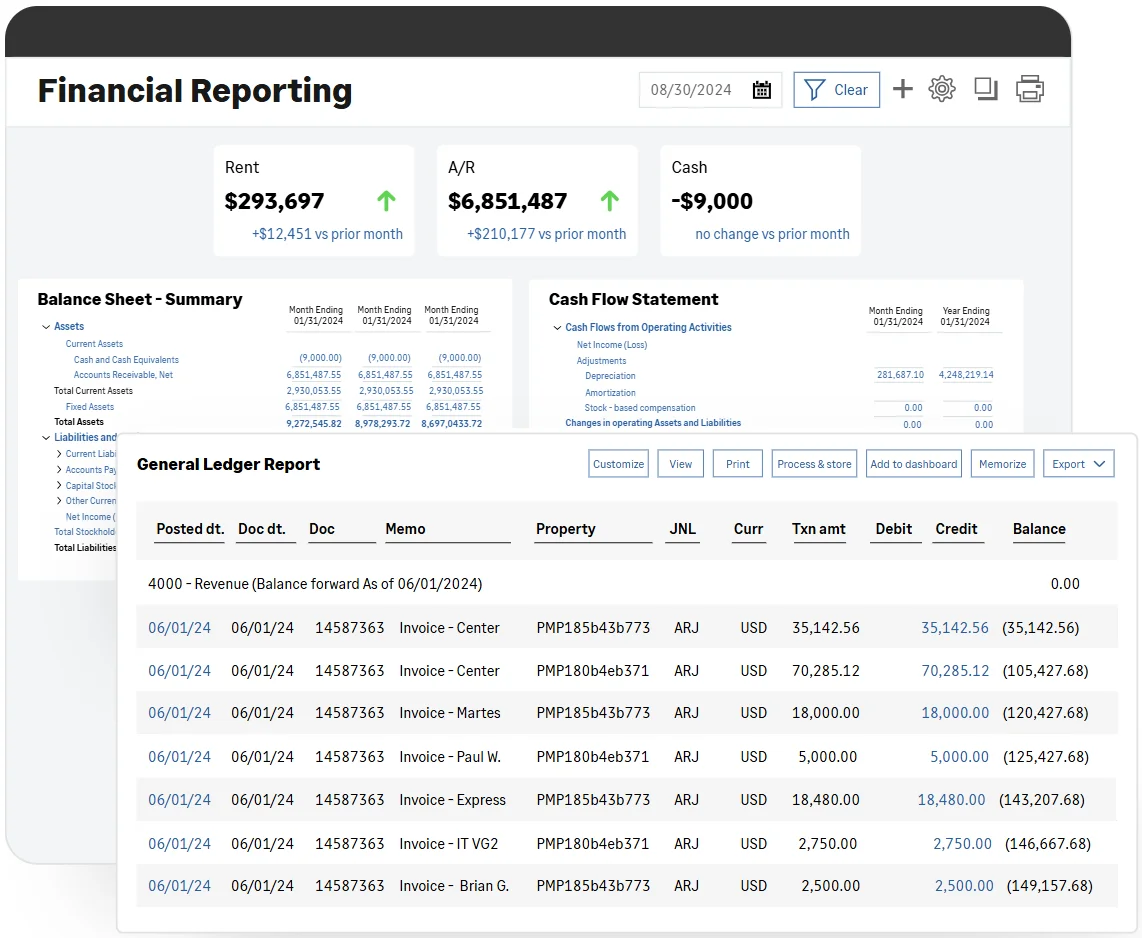
Sage Intacct is a finance management system that gives you more visibility into your portfolio and reduces errors from manual data entry. According to the company, its users benefit from streamlined cloud accounting, easier reporting, and best-in-class security.
10. Stessa
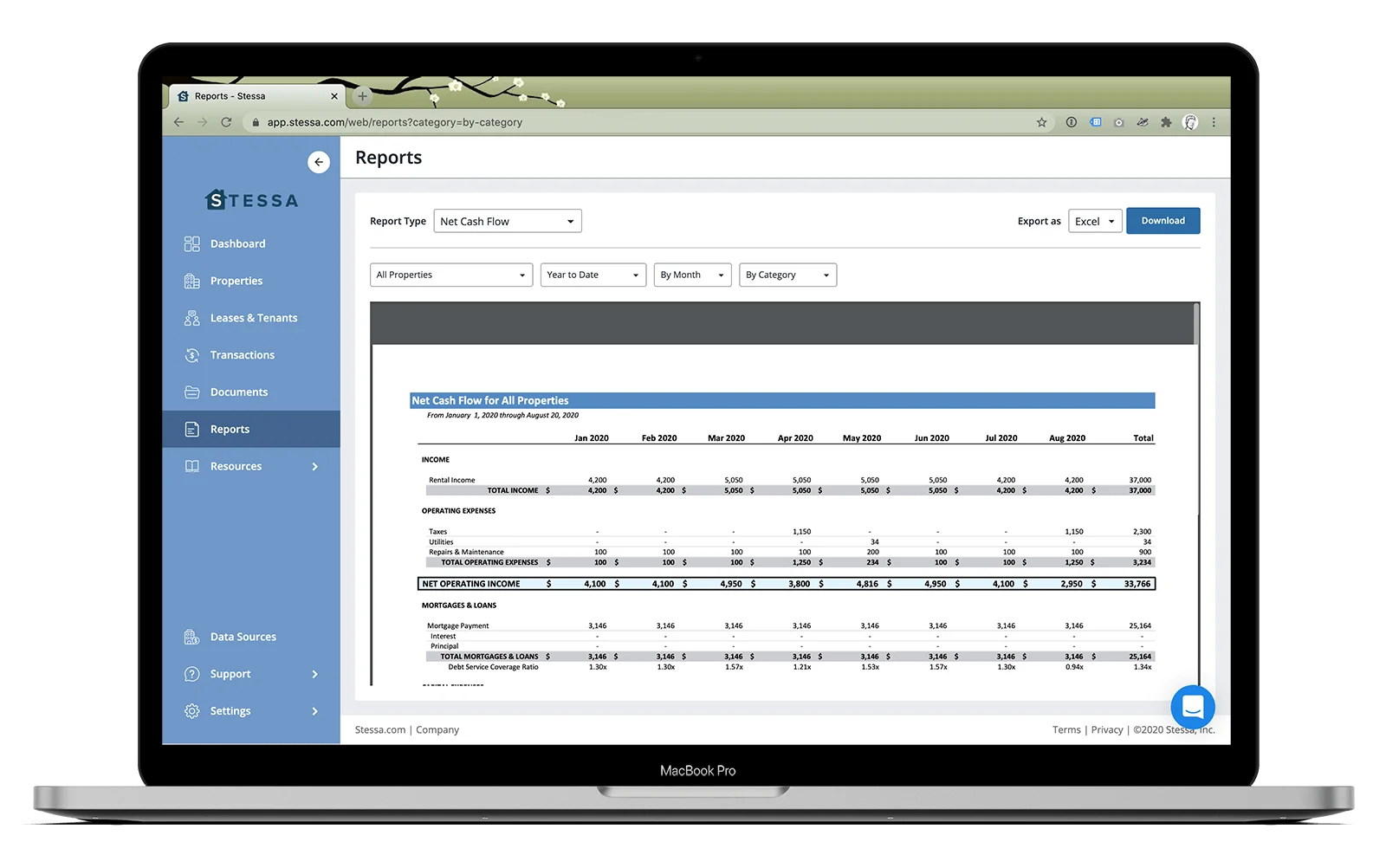
Stessa is a platform built for landlords to manage their rental portfolios. It includes common accounting features like expense tracking, performance dashboards, and financial reporting. Though not ideal for large real estate fund administration, it’s well-suited for smaller portfolios.
Accounting software comparison overview for real estate investors
Now that we’ve introduced the top real estate accounting softwares, here’s how they stack up:
| Tool | Accounting focus | Key financial capabilities | Best for |
| Agora | Year-round bookkeeping | Reconcillation, K-1 delivery, and tax prep | Real estate sponsors and fund managers |
| Yardi | Streamlining manual accounting processes | Automated consolidations, eliminations, and allocations | Large real estate investment firms |
| AppFolio Investment Management | Calculating distributions | Complicated distribution structures, including preferred returns, waterfall structures, and carried interest | Sophisticated investment management firms |
| MRI Software | Integrated real estate accounting services | AP automation, budgeting and forecasting, and job cost | Large real estate teams |
| Quickbooks with real estate add-ons | On-the-go bookkeeping | Automated bookkeeping, bank feeds, and expense tracking | Real estate agents and other CRE professionals |
| Buildium | Centralized company bookkeeping | Financial performance monitoring and reporting | Landlords and property managers |
| Rentec Direct | Property management accounting | Trust-account compliance and industry-standard reporting | Landlords and property managers |
| Propertyware | Portfolio-level accounting | Quick reconciliations, fee management, and custom reports | Property owners and managers |
| Sage Intacct for real estate | Finance management | Cloud accounting and best-in-class data security | Commercial property managers |
| Stessa | Rental property accounting | Expense tracking, performance dashboards, and financial reporting | Small landlords |
What real estate investors should look for in accounting software
When assessing different real estate accounting software options, look for the following:
- Property-level and fund-level accounting: The software should let you track financials at the individual property level and across your entire portfolio, so you maintain a clear financial picture at every layer.
- Income, expense, and cash flow tracking: Look for software that makes it easy to categorize rental income and operating costs, so you can better understand where money is flowing in and out of your business.
- Investor distributions and capital account management: If you manage money on behalf of LPs, you need software that can calculate and record distributions, track each investor’s capital balance, and maintain a clean paper trail of every transaction.
- Financial reporting and audit readiness: Strong real estate accounting software will generate reports that comply with government standards and hold up to scrutiny during an audit.
- Tax preparation and compliance support: Look for tools that simplify depreciation schedules, support cost segregation tracking, and make it easy to hand off organized financials to a CPA at tax time.
- Integrations with banking, CRM, and property systems: The best accounting software connects seamlessly with your existing bank feeds, property management platform, and CRM tools.
How accounting software supports the real estate investment lifecycle
Real estate accounting software can support the entire real estate investment lifecycle:
Tracking income and expenses across properties
From the moment you close on an asset, accounting software gives you a dedicated ledger, making it simple to monitor rent collection, operating costs, and net income.
Managing capital contributions and distributions
Whether you’re accepting capital from partners at acquisitions or distributing profits after a refinance or sale, accounting software keeps a precise record of every dollar that goes in and out of the investment fund.
Supporting fund accounting and investor reporting
As your portfolio grows, accounting software lets you produce clean, professional reports that keep your LPs informed and your fund operations running smoothly.
Simplifying period close and financial audits
Good accounting software compresses your monthly and quarterly close process by automating reconciliations and flagging discrepancies early. That way, if an auditor or lender comes calling, your books are already in order.
Maintaining long-term financial visibility across portfolios
Over a multi-year hold period, accounting software builds a complete financial history of each asset and your portfolio as a whole, giving you the data you need to make informed decisions about refinancing, dispositions, or your next acquisition.
How to choose the best accounting software for your real estate business
To find the best accounting software for your real estate business, follow these steps:
| Evaluation criteria | What to consider |
| Define your investment structure and reporting needs | Before evaluating any software, get clear on whether you’re managing a single rental property, a multi-entry fund, or something in between. |
| Evaluate support for multiple entities and funds | If you operate across multiple partnerships or funds, make sure the software can handle each entity separately while still giving you visibility across all of them. |
| Assess automation for distributions and reconciliations | The right software should reduce the manual burden of calculating investor distributions and matching transactions to bank statements, so look for platforms that automate these processes. |
| Consider integration with investor and property systems | Think through the full ecosystem of tools that your business relies on and prioritize accounting software that can integrate with as many of them as possible. |
| Compare pricing based on portfolio size and complexity | Accounting software pricing can range from a flat monthly fee to a per-unit model, so map each option’s cost structure against your current portfolio and growth trajectory. |
How Agora supports accounting and reporting for real estate investors
Agora is uniquely suited for CRE sponsors and fund managers because it supports all of their accounting and reporting needs. From reconciliations and ongoing book management to K-1 delivery and tax prep, Agora handles everything for you.
As a result, users benefit from:
- Time and cost savings: Less reliance on external accountants and fewer hours spent on manual data entry
- Audit-ready records: A clean, organized paper trail that simplifies due diligence and regulatory compliance
- End-to-end tax preparation: Full support for tax prep workflows so you can close out the year without juggling multiple tools or vendors
- Investor-ready reporting: Professional reports available on demand, giving LPs full visibility into fund performance
Conclusion
Choosing the right accounting software is one of the most important operational decisions a real estate investor can make. It gives you the financial clarity to grow your portfolio with confidence.
Whether you’re a landlord managing a handful of rentals or a fund manager overseeing a complex multi-entity structure, there’s a solution on this list built for your needs.
If you’re looking for an all-in-one platform that handles everything from reconciliations to K-1 delivery, Agora is worth a close look.



![AppFolio alternatives: Best property management platforms compared [2026]](https://res.cloudinary.com/de1ep59a0/images/v1768801446/Appfolio-alternatives_cover-02/Appfolio-alternatives_cover-02.webp?_i=AA)