Great team plays don’t start on the pitch. They start on the training ground: film reviewed, patterns spotted, moves rehearsed together, so by the whistle nobody needs a voice in their ear.
That’s the model we’ve built GTM enablement around at Agora, and it works because the people teaching are still in the work. Solution engineering and enablement are one loop here: the same people join the complex deals, run the demos, and then bring what they learned back into the sessions. Nothing gets taught from a slide deck that hasn’t been tested on a real call.
That’s also why nothing here started with us deciding what the team needed and building it in a room by ourselves. Before we ran a single SDR session, we sat with SDR team leads and built it with them. Same with CS, same with the AE team. Bottom-up doesn’t just mean built at Agora instead of borrowed from outside, it also means built with the people who’d actually be sitting through it.
Over the last few years, we’ve trained the team at every scale, from whole-team sessions to small groups to 1:1s. The goal from day one: every rep, from the first campaign touch through to customers and partners, can handle the moment in front of them without waiting on someone else.
Onboarding is where this actually starts
The first real test of this whole approach happens the moment someone new joins. When a new SDR, AE, or CS hire starts, they get a full onboarding track: someone directly responsible for teaching them, walking them through the software domain by domain, with certifications along the way, and time with different people across the org.
We built a dedicated learning tool for it, and, because not everyone learns best staring at a screen, our team can listen to a short internal podcast. The result: on average, AEs win their first deal 22 days after certification.
Readiness scales better than rescue
The classic instinct when a rep hits a wall, is to send someone in. For a technical question, a tough discovery call, or a feature nobody’s fully ramped on yet, we usually put an expert on it. That works exactly once. It doesn’t scale, and it quietly teaches the org that the fix for a hard moment is always another person.
The real constraint was whether the person already on the call had good enough instincts, and good enough information, to handle it themselves. That’s exactly why we’re building the ability to flag the specific calls where this shows up, in the moment, not just in a quarterly look-back.
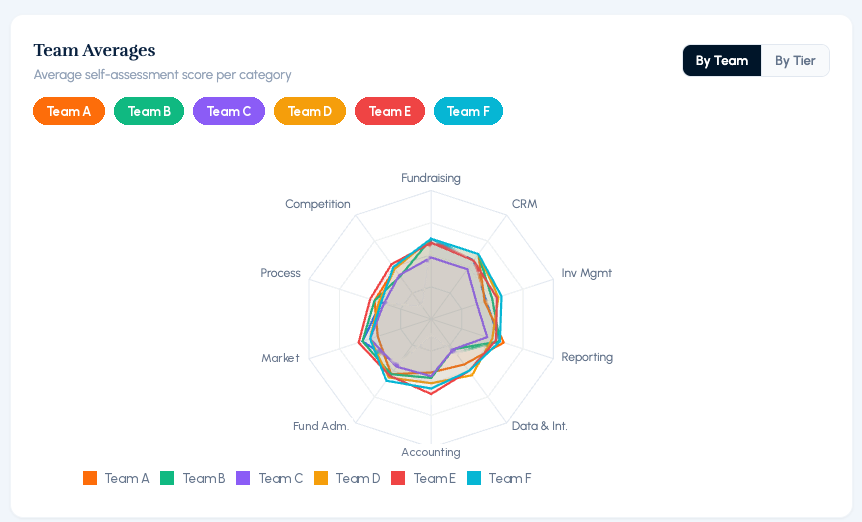
Quarterly self assessments
Finding the gap before it costs you a deal
We spot gaps through three main inputs: call recordings, live coaching, and a self-assessment every quarter where each rep tells us what they want to get sharper at, and where they’d like more hands-on practice with us.
One pattern was talk-time on discovery calls, especially for reps earlier in their ramp. We shared the numbers, and reps adjusted on their own.
The same kind of look across the team, at the deal level, showed where we were strong and where we weren’t. That’s how we ended up doubling down on specific deal types, and picked a handful of dormant leads back up that the data said were worth another look.
From “here’s what’s new” to “here’s what’s working”
Our sessions used to cover the product and the competitive landscape. Now SEs and AEs run joint sessions built around what’s winning deals right now. We go back over the whole arc, from the first SDR touch through to a signed customer, and ask what resonated, where a prospect needed a technical deep dive, and what almost cost us the deal.
Each SE also owns a few reps day to day, with ongoing feedback and training. When a new feature ships, we go past what it does: we work through the talk track and show real examples of which customers need it.
It works across teams too. AEs join SDR sessions to share what’s working on live deals. CS and onboarding join sales sessions to show what a customer’s day-to-day looks like once they’re live, which gives reps a fuller picture of the product in use.
SDRs need something different: dedicated practice on the questions that come up off-script, like our roadmap, upcoming releases, and our full accounting and tax services.
CS, Customers, and Partners
CS runs a parallel version of this internally that Hana Gruzman, who leads CS enablement, built out further. The team reviews every release on a two-week cycle before it reaches a single customer, plus a monthly deep dive into one specific part of the product.
Customers and partners get their own version of this too, run by the same CS enablement function, aimed at adoption rather than internal readiness. There’s a recordings library people work through on their own, and a weekly live session on a domain relevant to them. For instance debt structures or bookkeeping workflows are built to be something people choose to attend rather than something CS has to schedule for them. All of it lives in Agora’s own resource center for customers, Agora Training Hub.
Every level, not just the rep
This is continuous, not a once-a-quarter exercise. With our VP of Sales, it’s ongoing contact on the pipeline as a whole, layered with a quarterly review to plan which teams or deal types need focus next. With individual reps, the quarterly self-assessment tells us what they want help with, and feeds directly into their next round of coaching. We’re piloting giving team leads a deeper cut of the same performance data everyone already has, so the conversation starts from something real.
Where this is heading
Right now, most of this centers on the person. The next version focuses on the pipeline and on individual deals over time, showing where real potential is sitting unworked in the funnel. AI is a big part of getting there, moving us toward coverage of every call instead of a sample.
This was never about telling talented people how to sell, support, or manage an account. It’s about making sure the person on our side already has what they need, with solution engineering joining directly on the deals that call for it. The team is on the pitch, just not on every play.