




Key takeaways
- AI is now essential for CRE investors, automating reporting, underwriting, and distributions so GPs can do more with less.
- The right tool depends on your workflow. Some platforms focus on fundraising, others on underwriting, and still others on development.
- Purpose-built CRE platforms beat generic tools by supporting complex fund structures, waterfalls, and K-1 reporting without custom workarounds.
As a commercial real estate (CRE) investor, the tools you use to drive deals through your pipeline can make a big difference. Artificial intelligence (AI) tools are some of the best available. They can help automate routine tasks, analyze deals, flag data discrepancies, and more. Investors who ignore AI will be left behind by those who embrace it. So do yourself a favor and take advantage of AI.
How AI is changing real estate investment management
Let’s take a closer look at how AI is changing real estate investment management:
Automating investor reporting and distribution workflows
Generating quarterly reports and distribution calculations used to mean manually pulling figures from multiple systems. Platforms like Agora now automate waterfall calculations and use report builders and templates to streamline investor updates.
AI-assisted fundraising and investor onboarding
Onboarding new LPs has traditionally meant slow, document-heavy back-and-forth. Tools like Agora’s Smart Questionnaire use AI to guide investors through subscriptions and signatures, turning a process that used to take days into one that takes minutes.
Predictive analytics for deal underwriting and portfolio performance
Instead of building pro formas deal by deal, AI tools use predictive analytics and machine learning to evaluate rents and estimate expenses. This lets you evaluate more deals faster and spot portfolio-level performance trends earlier.
AI-powered document management and compliance
Lease agreements, tax forms, and rent rolls pile up fast, and reviewing them by hand is slow and error-prone. Agora automatically identifies, categorizes, and assigns documents to the right investor or entity, all while maintaining the audit trail that investors and regulators expect.
8 best AI tools for real estate investors and GPs
Now that you have a taste for what AI can do for real estate investors, here are the 8 best AI tools to consider in 2026:
1. Agora
Agora is an all-in-one real estate investment management platform built specifically for CRE professionals who want to streamline LP fundraising, onboarding, reporting, and distributions.
Key features powered by AI include:
- Smart questionnaire that uses AI to guide investors through onboarding signatures
- Automated waterfall calculations for handling complex distribution models
- AI Smart assistant for resolving investor inquiries faster
Agora has an average 4.8/5 rating out of 318 reviews on G2. Users praise the platform’s clean, intuitive design.
Agora’s pricing starts at $749/month for the Essential Plan. For the cost of the Pro and Enterprise plans, contact our sales team.

2. Dealpath
Dealpath is an AI-powered operating system for real estate investing. According to the company, the platform helps you harness data, AI, and automation from sourcing to close.
Key AI features include:
- Claude and Copilot integrations that let you analyze your pipeline, comps, and portfolio
- AI Excel Assistant for validating assumptions, proprietary comps, and previous deals
- Deal screening based on OMs, rent rolls, T12s, BOVs, and pro formas
Dealpath has a 4.3/5 rating based on 10 reviews on G2. Users appreciate Dealpath’s API features and its ability to bring everything together in one place.
Dealpath doesn’t list its pricing on its website. Contact the company directly to learn more.

3. Northspyre
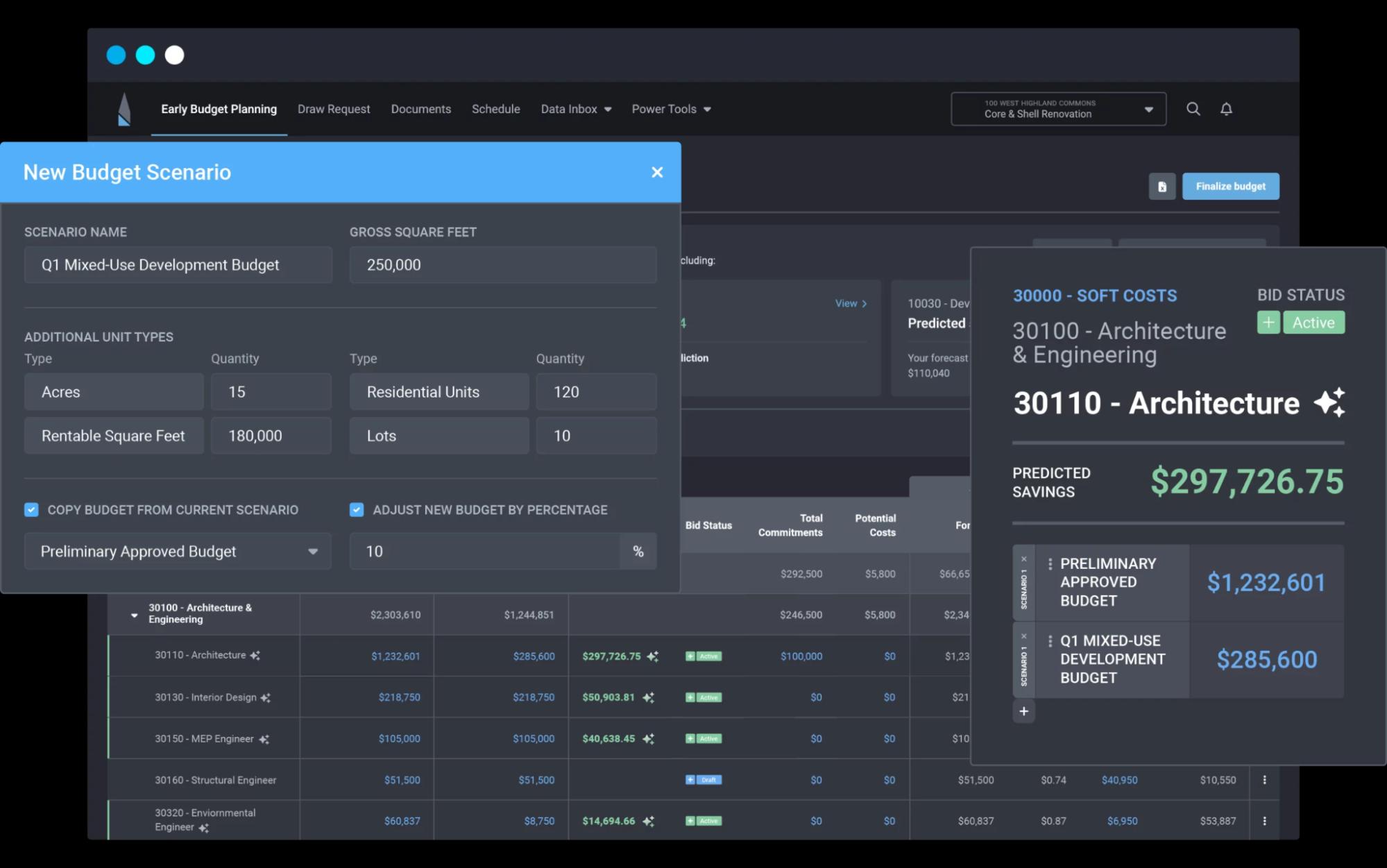
Northspyre is a real estate development management software. It claims to be the only end-to-end platform of its kind.
Key AI features include:
- Patented AI budget categorizations for organizing projects
- Portfolio cost analytics
- Portfolio vendor analytics
Northspyre has an average 4.4/5 rating across 26 reviews on G2. Users praise the platform’s ease of use, customer support, and ability to streamline budgeting and project management.
Northspyre has two pricing plans: Pro and Enterprise. However, the company doesn’t publish the cost of either. Contact the company directly to learn more.
4. Procore
Procore is a construction management platform. According to the company, it helps you manage construction projects from preconstruction to closeout with the insights you need to maximize safety, efficiency, and ROI.
Key AI features include:
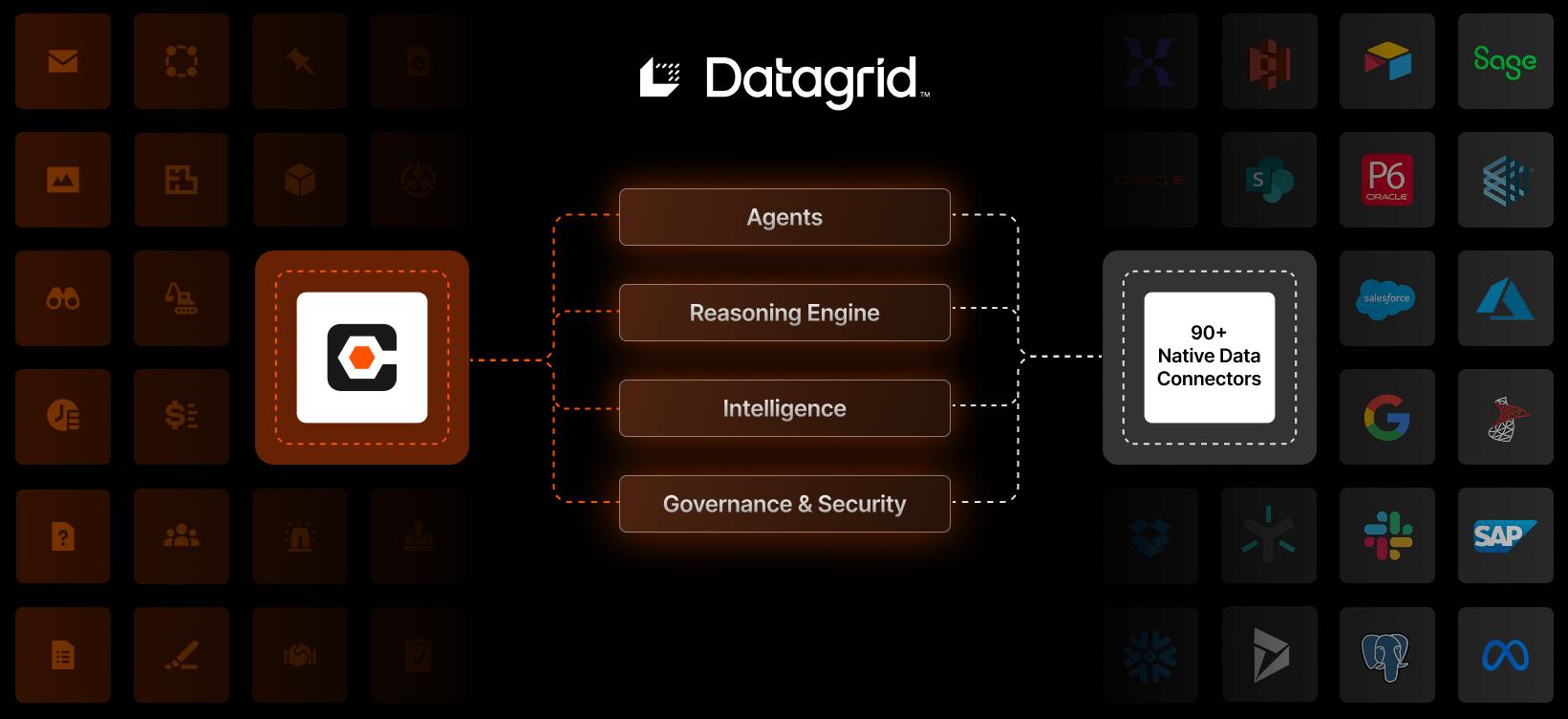
- 18+ built-in, job-specific AI agents to automate complex tasks
- Custom AI agents to unify Procore, partner, and customer-built apps
- A datagrid for compiling data into one place and providing actionable insights
Procore has an average 4.6/5 rating out of 4,183 reviews on G2. Users praise its ease of use and centralized project management capabilities.
Procore doesn’t list its pricing on its website. Contact the company directly to learn more.
5. ARGUS Assist
ARGUS Assist by Altus Group is an intelligence platform for commercial real estate. Powered by agentic AI, it can transform your workflows and user experience, generating real-time insights for faster, defensible decision-making.
Key AI features include:
- Natural language chat to get real-time insights on demand
- Generate valuations, run analyses, and manage performance with AI
- AI insights based on expansive CRE datasets
Altus Group has an average 4/5 rating across 30 reviews on G2. Users praise the software suite’s ample case studies and practical analysis of various performance scenarios.
Altus Group doesn’t list ARGUS Assist’s pricing on its website. Contact the company directly to learn more.

6. Reonomy
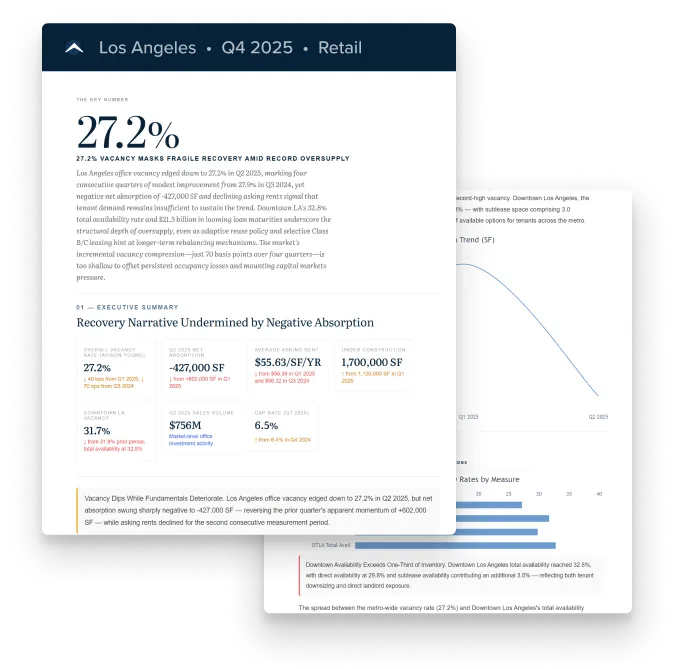
Reonomy is a commercial real estate data platform built on property and owner records. It uses machine learning to match each property detail and transaction with a property so you can work from one source of truth.
Key AI features include:
- “Likelihood to sell” predictive scoring system
- AI built on 54M+ commercial parcels across all 50 states, 3,100+ counties, and 385 metropolitan statistical areas.
Reonomy has an average 4/5 rating out of 4 reviews on G2. Users praise the platform’s intuitive interface and “likelihood to sell” metric.
Reonomy’s pricing starts at $500 per month or $400 per month when billed annually. Contact the company directly to learn more.

7. Cherre
Cherre is a real estate data management platform that collects, standardizes, validates, and supercharges your data ecosystem.
Its key AI features include:
- AI Agent marketplace with real-estate-specific agents that move deals, data, and decisions forward
- AI-powered data ingestions and workflow tools that collect, route, and validate data
- Business Intelligence (BI) platform for building downstream workflows, training AI models, and deploying agents
Cherre doesn’t have a rating or any reviews on G2.
Cherre doesn’t list its pricing on its website. Contact the company directly to learn more.

8. CREXi
CREXi is a commercial real estate marketplace platform. However, it also offers market analytics and other data tools.
Key AI features include:
- Deep AI market research
- Data enrichment for searching hundreds of property records at once
- AI tool for turning unstructured deal documents into polished deliverables
CREXi has an average 4.6/5 rating across 126 reviews on G2.
CREXi has free and paid plan tiers for brokers. Contact the company directly to learn more.
AI tools for real estate investors comparison overview
Here’s a breakdown of all 8 AI tools for easy comparison:
|
Tool | Primary use case | Key AI capabilities |
Best for |
| Agora | LP fundraising, onboarding, reporting, and distributions | Smart questionnaire for onboarding, automated waterfall calculations, AI Smart Assistant | Real estate GPs and sponsors managing the full investor lifecycle |
| Dealpath | Real estate investment operating system | Claude/Copilot integrations for pipeline and comp analysis, AI Excel Assistant, AI deal screening | Investment teams that want to centralize deal flow underwriting |
| Northspyre | Real estate development management | Patented AI budget categorization, portfolio cost analytics, portfolio vendor analytics | Developers tracking budgets and vendor performance across projects |
| Procore | Construction management | 18+ built-in job-specific AI agents, custom AI agents, unified data and insights | Investors who are also developers/GCs managing job-site execution |
| ARGUS Assist | CRE intelligence and valuation | Natural language chat for insights, AI-generated valuations and analyses, insights from CRE datasets | Investors needing fast, defensible valuations and analysis |
| Reonomy | CRE property and ownership data | “Likelihood to sell” predictive scoring, AI built on 54M+ commercial parcels nationwide | Investors sourcing off-market deals |
| Cherre | Real estate data management | AI agent marketplace, AI-powered data ingestion/validation, BI platform for training models and deploying agents | Teams building custom data workflows and AI models |
| CREXi | CRE marketplace with analytics | Deep AI market research, data enrichment across property records, AI tool for creating deal documents | Brokers and investors sourcing listings and market data |
Key features to look for in AI tools for real estate investors
When shopping for real estate investing AI tools, look for the following features:
- Automated waterfall calculations and distribution management: Look for a platform that can automatically calculate waterfall structures and execute distributions accurately.
- Investor portal with real-time reporting and document access: A good investor portal gives LPs 24/7 access to performance data and key documents like K-1s.
- Capital call and fundraising pipeline automation: The right tool should automate capital call notices, track commitments, and seamlessly move leads through onboarding.
- CRM and investor relationship tracking: A built-in CRM keeps a history of every investor interaction, so your team always has context before the next call or email.
- Accounting and tax operations integration: Look for tools that connect directly to accounting and tax systems, so distributions, K-1s, and financial reporting stay accurate without needing duplicate data entry.
- Fund structure support across syndications, funds, and debt vehicles: Since portfolios often span single-asset syndications, multi-asset funds, and debt deals, your AI tool should support all of these structures.
How to choose the right AI tool for your real estate investment firm
To choose the right AI tool for our real estate investment firm, follow these best practices:
Identify your most time-consuming investor relations workflows
Start by pinpointing which tasks (reporting, capital calls, document requests, etc.) eat up the most staff hours, since that’s where AI will likely deliver the highest return.
Assess fund structure complexity and reporting requirements
The more varied your fund structure and LP reporting needs, the more important it is to choose a platform that can handle that complexity natively rather than requiring workarounds.
Prioritize platforms built for GPs, not generic accounting tools
Purpose-built GP/LP platforms understand waterfalls, capital calls, and investor communications out of the box, while generic accounting software will leave you customizing and patching gaps.
Evaluate integration with existing accounting and CRM systems
A tool that integrates cleanly with your current accounting and CRM stack saves you from duplicate entry and the reconciliation headaches that come with disconnected systems.
Consider scalability across investor count, fund types, and deal volume
Choose a platform that can grow with you, since a tool that works well for 50 investors and one fund may buckle once you’re managing hundreds of LPs across multiple fund types.
Best practices for implementing AI in real estate investing
Implementing AI in your real estate investing business for the first time takes time. Here’s how to put AI into practice with minimal hiccups:
- Start with a single high-pain workflow, not a full platform overhaul.
- Keep a human in the loop for investor-facing communication.
- Clean up your data before you automate it.
- Maintain audit trails and compliance documentation.
- Revisit and refine your AI processes periodically.
Conclusion
The truth is, AI is no longer optional for real estate investors. It’s what sets apart teams that scale from those that get buried in manual work. The eight tools listed above each solve a different piece of that puzzle, from investor reporting to deal underwriting. The best move now is to match the right tool to your current needs, not chase every new feature on the market.





![10 best investor reporting software for real estate [2026]](https://res.cloudinary.com/de1ep59a0/images/v1781175724/Best-investor-reporting-software/Best-investor-reporting-software.webp?_i=AA)


